




What Is a General Physician?
A general physician is a medical doctor who assesses, diagnoses and manages a broad range of common adult health problems, including infections, fever, digestive complaints, diabetes, high blood pressure and unexplained symptoms.
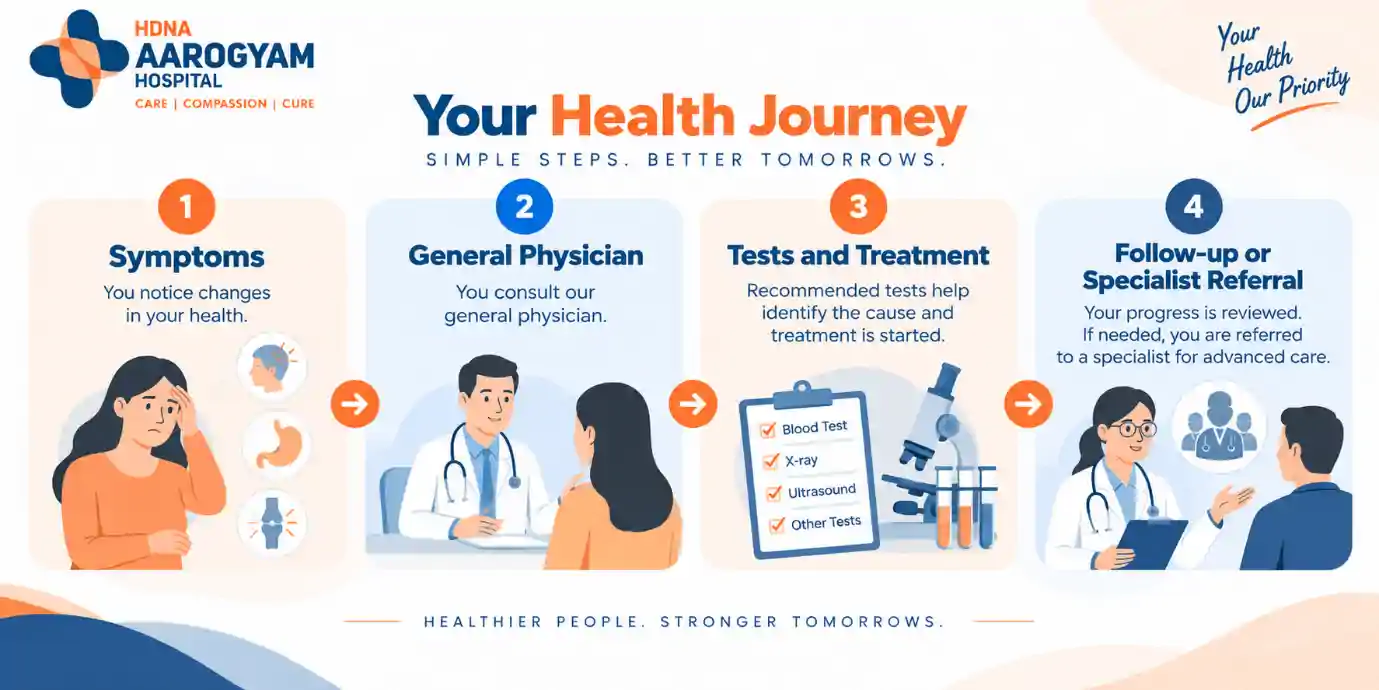
A general physician is often the first doctor a patient visits when the symptoms do not clearly point to one organ or specialty. A general physician doctor in patna may treat the condition directly, recommend tests, monitor recovery or refer the patient to a cardiologist, nephrologist, neurologist, surgeon or another specialist.
A general physician commonly provides:
First-contact medical assessment.
Fever and infection evaluation.
Diabetes checkup and long-term monitoring.
Blood pressure management.
Preventive health checkup planning.
Medication review.
Health advice and lifestyle counselling.
Referral to a specialist when required.
The WHO identifies accessibility, continuity, coordination, comprehensiveness and people-centred care as important functions of primary care.
Quick recap
A general physician treats a wide range of common health problems.
A general physician can coordinate care across multiple specialties.
A general physician is not limited to treating fever or minor illnesses.
For more information or to schedule an appointment, please contact us at:
Phone: +91-8544015151 / +91-8544025151
Email: info@aarogyamhdna.com
Address: Off Bailey Road, Behind Damro Showroom & Maruti Alankar Showroom, Rupaspur, IAS Colony, Patna, Bihar 801503
Why General Physician Care Matters Today
Modern primary care is not simply about treating symptoms after illness begins. Primary care also includes prevention, early detection, chronic disease management, rehabilitation and coordination with higher levels of care.
India’s primary healthcare approach includes screening and management of non-communicable diseases such as hypertension and diabetes. The Ministry of Health and Family Welfare has also emphasized the role of comprehensive primary care in reducing complications and unnecessary pressure on secondary and tertiary hospitals.
What this means for patients in Patna
A reliable general physician in Patna can help patients:
Understand whether symptoms require urgent attention.
Avoid unnecessary self-medication.
Identify early warning signs of chronic disease.
Arrange appropriate blood tests or imaging.
Manage recurring health problems.
Decide whether specialist consultation is necessary.
How to Choose a General Physician in Patna
The right doctor is not always the doctor with the most online reviews or the lowest consultation fee. The better choice is a doctor who combines relevant qualifications, careful examination, understandable advice, appropriate investigations and reliable follow-up.
Use the following selection process before booking an appointment.
Check Qualifications and Clinical Experience
1. Verify the doctor’s medical qualifications
Patients should check whether the doctor has a recognized medical qualification and relevant clinical training. Depending on the patient’s needs, a physician with postgraduate training in general medicine or internal medicine may be particularly suitable for complex adult health conditions.
Look for clear information about:
Medical degree and postgraduate qualifications.
Areas of clinical interest.
Years of experience.
Hospital or clinic affiliation.
Registration details where publicly available.
Experience managing chronic conditions.
A doctor’s online profile should provide enough information for patients to understand the doctor’s role. Patients should be cautious of profiles that make unsupported claims such as “guaranteed cure” or “best doctor for every disease.”
2. Match experience with the patient’s concern
A patient with recurring fever may need a different clinical approach from a patient with uncontrolled diabetes or multiple medicines. Choose a general physician who regularly manages the patient’s type of concern.
Recap
Verify qualifications before booking.
Check whether the doctor treats the patient’s specific concern.
Avoid relying only on promotional claims.
Choose a Doctor Who Offers Comprehensive Care
A good general physician should look beyond one symptom. For example, repeated tiredness may be associated with sleep problems, anaemia, diabetes, thyroid disorders, infection, medication effects or another condition. A proper consultation should consider the patient’s medical history, symptoms, lifestyle and examination findings.
Common services to look for
Fever treatment
A physician should assess the duration, severity and associated symptoms of fever rather than automatically prescribing antibiotics. The doctor may decide whether testing is required based on the clinical presentation.
Diabetes checkup
Diabetes care may include reviewing blood glucose reports, medicines, diet, weight, blood pressure and possible complications. Patients should ask about follow-up frequency and when repeat tests are needed.
Blood pressure management
Blood pressure management involves more than recording one reading. A physician may review repeated readings, medication adherence, diet, kidney health, cardiovascular risk and other relevant factors.
Preventive health checkup
A preventive health checkup may include assessment of age-related risk factors, vaccination needs, lifestyle habits, blood pressure, weight and recommended screening tests.
Questions to ask the doctor
What could be causing the symptoms?
Are any tests necessary?
Which warning signs require urgent care?
When should the patient return?
Is specialist consultation needed?
What lifestyle changes may help?
Recap
Comprehensive care considers the whole patient.
Fever, diabetes, BP and preventive care are common physician services.
Patients should receive a clear diagnosis or working assessment and follow-up plan.
For more information or to schedule an appointment, please contact us at:
Phone: +91-8544015151 / +91-8544025151
Email: info@aarogyamhdna.com
Address: Off Bailey Road, Behind Damro Showroom & Maruti Alankar Showroom, Rupaspur, IAS Colony, Patna, Bihar 801503
Evaluate Hospital Facilities and Specialist Support
A standalone clinic may be suitable for routine consultations. A hospital-based general physician may be more convenient when the patient may need blood tests, imaging, observation, emergency support or specialist referral.
Why hospital support can matter
A hospital with multiple specialties can coordinate care when symptoms are complicated. For example, a patient with swelling, high blood pressure and abnormal kidney function may need physician assessment followed by nephrology evaluation. A patient with chest discomfort may require immediate cardiac assessment rather than a routine clinic appointment.
HDNA Aarogyam Hospital, Patna
HDNA Aarogyam Hospital, also written as Aarogyam HDNA, is a multispeciality tertiary care hospital located off Bailey Road in the Rupaspur and IAS Colony area of Patna. The hospital’s stated service profile includes cardiac, renal, neurological, orthopaedic, surgical and critical-care services.
The hospital’s stated facilities and care areas include:
General and internal medicine support.
Cardiac and renal centres of excellence.
Nephrology and dialysis services.
Neurology and neurosurgery support.
Orthopaedics and joint replacement.
General and laparoscopic surgery.
Endocrinology and paediatrics.
24x7 emergency and trauma care.
Intensive care services.
Diagnostic and specialist coordination.
Patients should confirm current doctor schedules, consultation availability, services and payment eligibility directly with the hospital before visiting.
What to verify before booking
Is a general physician available on the required date?
Can diagnostic tests be arranged at the hospital?
Is emergency care available when needed?
Are specialist referrals coordinated internally?
Is cashless treatment available under the patient’s insurance or scheme?
What is the correct hospital entrance and address?
Recap
Hospital-based physician care may be useful for complex or recurring conditions.
Specialist and diagnostic access can reduce delays in care.
Patients should confirm current services and availability before visiting.
Compare Location, Availability and Consultation Costs
Location matters when a patient needs repeated visits, follow-up testing or urgent assessment. A hospital near Bailey Road, Rupaspur, IAS Colony or nearby areas may be convenient for residents of South and West Patna, but patients should choose based on travel time, accessibility and medical need.
Compare these practical factors
Factor | What patients should check |
Location | Exact address, landmark and travel time |
Appointment | Booking process and available consultation hours |
Waiting time | Whether appointments are scheduled or walk-in |
Consultation fee | Current fee and additional charges |
Tests | Availability and estimated costs |
Follow-up | Review policy and follow-up timing |
Insurance | Cashless, PM-JAY or TPA eligibility |
Emergency support | Availability outside OPD hours |
The Aarogyam Hospital Patna address should be confirmed through the hospital’s official contact channels before travelling, especially when the patient is visiting for the first time.
Questions about cost
Patients should ask whether the consultation fee includes a follow-up visit. Patients should also confirm whether laboratory tests, imaging, medicines or procedures are charged separately.
Recap
Convenient location supports continuity of care.
Consultation fees and test charges should be clarified in advance.
Insurance and cashless eligibility should be confirmed before admission or treatment.
Understand When to Visit a General Physician
Patients should not wait until symptoms become severe before seeking medical advice. A general physician can evaluate new, persistent or unexplained symptoms and determine whether further investigation is needed.
Common reasons to book a consultation
Fever that persists or repeatedly returns.
Cough, sore throat or breathing-related symptoms.
Weakness, fatigue or unexplained weight change.
Headache or dizziness.
Digestive problems, acidity or abdominal discomfort.
Diabetes monitoring.
High or fluctuating blood pressure.
Joint or body pain.
Sleep problems.
Medication review.
Preventive health checkup.
Multiple symptoms without a clear cause.
When emergency care is more appropriate
A routine general physician appointment is not suitable for severe or rapidly worsening symptoms. Seek emergency care for:
Severe chest pain or pressure.
Serious breathing difficulty.
Sudden weakness, facial drooping or speech difficulty.
Fainting or unconsciousness.
Severe bleeding.
Seizures.
Serious injury.
Sudden confusion.
Severe allergic reaction.
Recap
General physicians manage many common and ongoing health concerns.
Persistent or unexplained symptoms deserve medical assessment.
Emergency symptoms require immediate emergency care.
Clinic Consultation vs Hospital-Based Physician Care
Feature | Clinic-based physician | Hospital-based physician |
Routine consultation | Usually suitable | Usually suitable |
Basic illness management | Suitable | Suitable |
Diagnostic testing | May require outside referral | May be available on-site |
Specialist referral | Often external | May be coordinated internally |
Emergency backup | Depends on clinic | Usually stronger in a hospital setting |
Complex patients | May need referral | Often more convenient |
Chronic disease follow-up | Suitable with continuity | Suitable with broader support |
Admission or observation | Usually limited | May be available when indicated |
Neither setting is automatically best for every patient. A clinic may be appropriate for a straightforward consultation, while a hospital may be more practical for patients with multiple conditions, abnormal test results or possible complications.
For more information or to schedule an appointment, please contact us at:
Phone: +91-8544015151 / +91-8544025151
Email: info@aarogyamhdna.com
Address: Off Bailey Road, Behind Damro Showroom & Maruti Alankar Showroom, Rupaspur, IAS Colony, Patna, Bihar 801503
How to Prepare for a Physician Consultation
Step 1: Write down the main symptoms
Record when the symptoms started, how frequently they occur and whether the symptoms are improving or worsening.
Step 2: Bring previous medical records
Carry previous prescriptions, blood reports, scans, discharge summaries and vaccination records when relevant.
Step 3: Prepare a medicine list
Include prescription medicines, over-the-counter products, supplements and the dose or frequency of each medicine.
Step 4: Note important medical history
Mention diabetes, hypertension, kidney disease, heart disease, allergies, previous surgeries and family history.
Step 5: Ask for a follow-up plan
Before leaving, confirm the diagnosis or working assessment, recommended tests, treatment instructions, warning signs and follow-up date.
Recap
A prepared patient helps the physician understand the case faster.
Previous reports and medicine lists can prevent duplication and errors.
A clear follow-up plan is an important part of good care.
Trends to Watch in General Physician Care in 2026
More emphasis on preventive care
Preventive care is becoming an important part of routine medical consultations. The CDC describes regular checkups as including appropriate vaccinations, screenings, blood tests and measurements such as blood pressure, weight and cholesterol.
Better coordination for chronic diseases
Diabetes, hypertension, kidney disease and cardiovascular risk often require long-term monitoring rather than one-time treatment. Patients increasingly benefit from coordinated care between general physicians, specialists, diagnostic teams and hospitals.
Greater demand for accessible local care
Patients often prefer healthcare services that are close to home and connected to reliable diagnostic and specialist facilities. For Patna residents, accessibility around Bailey Road, Rupaspur and IAS Colony can be an important practical consideration.
More informed patients
Patients now compare doctor profiles, hospital facilities, reviews, consultation fees and insurance support before booking. Online information is useful, but patients should still verify current schedules, qualifications and services through official hospital channels.
Recap
Preventive health checkups are an important part of modern primary care.
Chronic disease management requires continuity and follow-up.
Patients should use online information but verify important details directly.
Frequently Asked Questions
What does a general physician treat?
A general physician treats and evaluates many common adult health concerns, including fever, infections, cough, digestive problems, weakness, diabetes, high blood pressure and unexplained symptoms. A general physician can also refer patients to specialists when required.
How do I find the best general physician in Patna?
To find the best general physician in Patna, compare medical qualifications, clinical experience, patient communication, appointment availability, hospital support, location, consultation fees and follow-up arrangements. The right doctor should match the patient’s medical needs rather than relying only on online ratings.
When should I visit a general medicine doctor in Patna?
A patient should visit a general medicine doctor in Patna for persistent fever, recurring symptoms, weakness, digestive problems, diabetes monitoring, blood pressure management, medication review or preventive health checkups. Severe chest pain, serious breathing difficulty, sudden weakness or unconsciousness requires emergency care.
What services are offered by HDNA Aarogyam Hospital?
HDNA Aarogyam Hospital’s stated services include general medical support, cardiac and renal care, nephrology, dialysis, neurology, neurosurgery, orthopaedics, general surgery, endocrinology, paediatrics, critical care and emergency services. Patients should confirm current availability and doctor schedules before visiting.
Where is Aarogyam Hospital Patna located?
HDNA Aarogyam Hospital is located off Bailey Road in the Rupaspur and IAS Colony area of Patna. Patients should confirm the current Aarogyam Hospital Patna address and the best entrance or landmark through the hospital’s official contact channels before travelling.
Conclusion
Choosing a general physician in Patna should involve more than selecting the nearest clinic. Patients should consider medical qualifications, experience, communication, comprehensive care, diagnostic access, specialist support, emergency readiness, location and transparent costs.
For patients seeking physician consultation with access to multispeciality and critical-care support, HDNA Aarogyam Hospital in Patna may be a practical option to explore. Patients can contact the hospital to confirm general physician availability, consultation timings, services, fees and appointment requirements.
Contact HDNA Aarogyam Hospital to enquire about a general physician consultation in Patna and confirm the next available appointment.
Content freshness note: This article should be reviewed periodically, especially when doctor schedules, consultation fees, hospital services, insurance partnerships or contact details change.
Author Bio Placeholder: Written by the Aarogyam HDNA healthcare content team, with editorial review by a qualified medical professional. The article is intended for general health education and does not replace an in-person medical consultation.


